Understanding Terminology
Airtight Vapour Control Layer in a Breathable Insulation System?
Aug
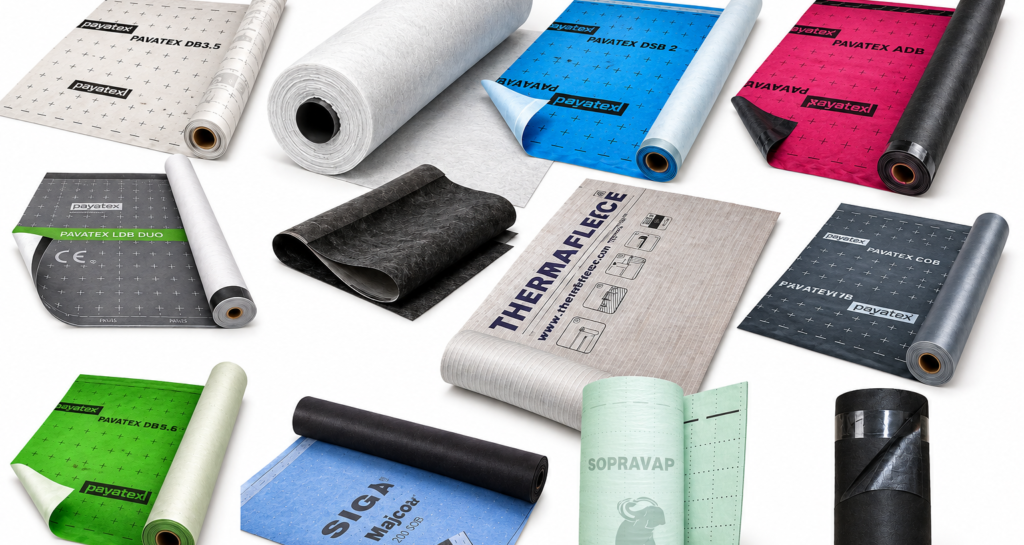
One of the questions our technical team gets asked most often is why you need an airtight vapour control layer (AVCL) in a breathable insulation system. It’s a fair question, because at first glance the two ideas seem to contradict each other.
The key point is that breathable doesn’t mean uncontrolled. An Airtight Vapour Control Layer (AVCL) has two essential functions:
• Create a continuous airtight layer that minimises air leakage.
• Limit water vapour movement into the building fabric.
This matters because air leakage transports significantly more moisture than vapour diffusion alone. Even relatively small gaps around service penetrations, junctions or poorly sealed membranes can allow warm, humid air to reach colder parts of the structure, increasing the risk of interstitial condensation and reducing the insulation’s thermal performance.
A breathable insulation system performs a different role. Rather than allowing moisture to enter, it allows any incidental moisture within the construction to dry out. Used together, an AVCL and a breathable insulation system limit moisture entering the construction while allowing any incidental moisture to dry out.
When combined, an Airtight Vapour Control Layer and a breathable insulation system help to:
• Improve airtightness and energy efficiency.
• Reduce the risk of interstitial condensation.
• Protect insulation performance.
• Extend the life of the building fabric.
• Create healthier, more resilient buildings.
As with most building products, specification is only part of the story. The performance of an AVCL depends just as much on careful installation, with continuity maintained at joints, penetrations and interfaces. A breathable building isn’t one that lets everything pass through. It’s one that manages moisture in a controlled, predictable way.
How do you approach moisture management in your projects? Do you tend to specify traditional AVCLs, or are intelligent vapour control membranes becoming your preferred solution?