
Sheep Wool Insulation
Sheepwool Insulation for Indoor Air Quality
Nov
Isolena Sheepwool Insulation for Cleaner Indoor Air
When planning internal retrofit works, one of the most important (but sometimes overlooked) factors to consider is indoor air quality and how the materials we choose can affect it. It may sound surprising to hear this, but some research indicates that indoor air may often contain higher and more variable levels of pollutants than outdoor air, particularly in modern, well-sealed buildings that limit natural ventilation and often contain materials that can contribute to poor air quality.
That is why the materials we choose matter more than ever. At Unity Lime, we believe in creating buildings that not only perform well but also contribute to a healthier indoor environment. That is why the insulation products that we specify do not contribute to poor air quality, our staple product wood fibre insulation for example omits no VOC’s into the home, unlike many ‘commonly used’ insulation materials. But we do have an insulation product that actively neutralises harmful chemicals in the air! Isolena Sheepwool Insulation.
How does Isolena Sheepwool Insulation Purify the Air?
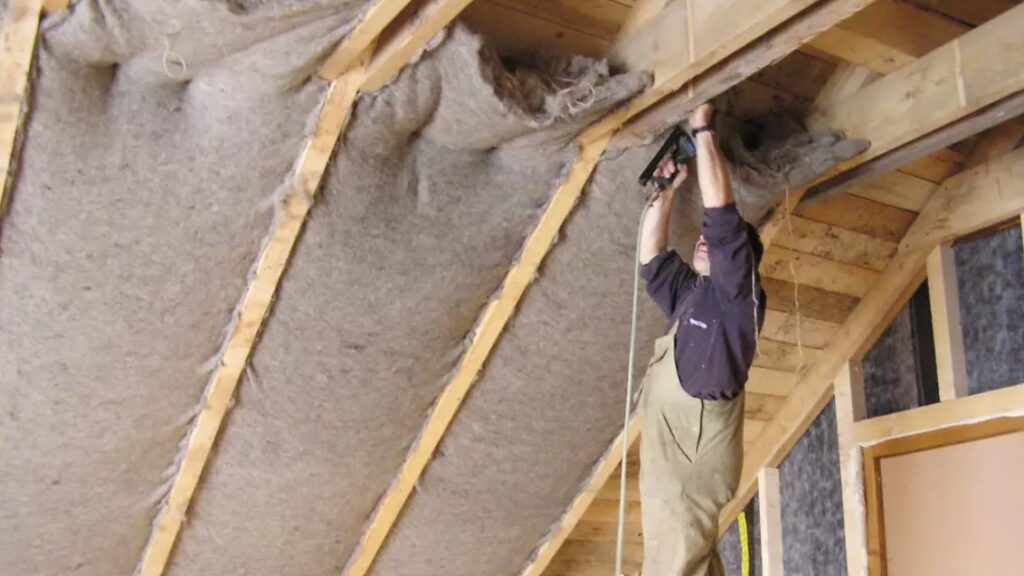
Sheepwool Insulation is a 100% natural product containing no chemical binders or additives. Its natural protein, keratin, contains reactive amino acids. These amino acids can chemically bind with certain airborne pollutants, particularly volatile organic compounds, often referred to as VOCs. Common VOCs found in buildings include formaldehyde, nitrogen oxides, and sulphur compounds, which are released from paints, adhesives, furniture, and some manufactured boards. When these pollutants encounter wool fibres, they react with the keratin structure and are converted into stable, non-volatile compounds. Once neutralised, they are not released back into the air. This is a chemical reaction rather than simple absorption.
Continuous performance over time
Sheepwool does have a finite number of reactive sites, so in theory it can reach saturation. However, under real building conditions this limit is not a practical concern. Indoor pollutant concentrations are relatively low, while wool insulation provides a very large surface area distributed throughout walls, roofs, and floors. As a result, wool can continue neutralising VOCs for decades, far exceeding the lifespan of most interior finishes. In normal residential and commercial buildings, it effectively behaves as a long-term, continuous air improver without the need for replacement or maintenance.
Moisture regulation and secondary benefits
In addition to VOC neutralisation, sheep’s wool can absorb and release up to around a third of its own weight in moisture vapour without feeling wet. This humidity buffering helps maintain a healthier indoor environment by reducing condensation risk, mould growth, and dust mite activity.
How this differs from air filters
Unlike HEPA or activated carbon filters, sheep’s wool does not need periodic replacement. Filters work by trapping or storing pollutants until they are full, whereas wool chemically neutralises many harmful compounds as part of its material structure. This makes it a passive solution that works continuously in the background.
Comparison to filters and purifiers
|
System |
Needs replacing? |
How it works |
|
HEPA filter |
Yes |
Mechanical trapping |
|
Activated carbon |
Yes |
Physical adsorption |
|
Sheep’s wool |
No |
Chemical neutralisation |
This is why wool is often described as a passive, permanent air improver, not a filter.
A natural contribution to healthier buildings
Sheep’s wool insulation is not a substitute for proper ventilation, but it complements breathable building design extremely well. By moderating humidity, improving thermal comfort, and permanently neutralising certain airborne pollutants, it supports healthier indoor air in a quiet, low-maintenance way. For projects focused on natural materials, low toxicity, and occupant wellbeing, sheep’s wool insulation offers benefits that go well beyond thermal performance alone.
Are there other products that help Purify the Air in my Home?
Another great product we can supply is Fibrolith Pure Genius. These wood wool panels combine acoustic comfort with active air purification. Their photocatalytic coating, activated by light, helps break down airborne pollutants such as VOCs, supporting cleaner indoor air alongside excellent sound absorption.
Whether you are building, renovating or specifying materials – prioritising indoor air quality should not be seen as a bonus but as an essential part of sustainable construction.
At Unity Lime, we are committed to helping create healthier, more comfortable indoor environments using natural, low-VOC materials.
If you would like to learn more about these products or discuss your project, please get in touch – our technical team will be happy to help.


Boards & Insulation


